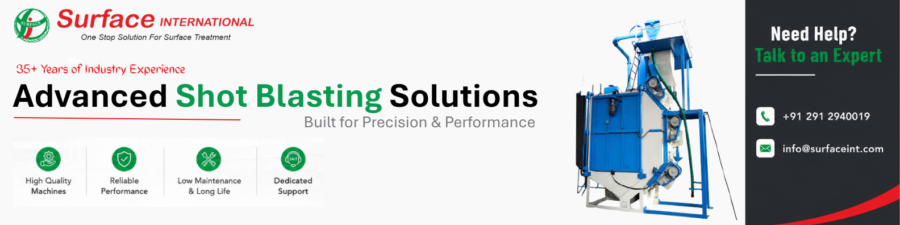
Investing in industrial machinery requires careful consideration, especially when it comes to the cost and long-term value. For businesses looking to optimize their surface preparation processes, a Tumblast Shot Blasting Machine is a vital piece of equipment. Understanding the nuances of its pricing is crucial for making an informed decision.
The Tumblast Shot Blasting Machine price in India typically starts from approximately ₹8,00,000 and can go up to ₹15,00,000 or more. This wide range primarily depends on factors such as the machine’s size, capacity, level of automation, specific technical specifications, and the manufacturer. This article will delve into these factors, helping you understand what influences the cost and how to secure the best value for your investment.
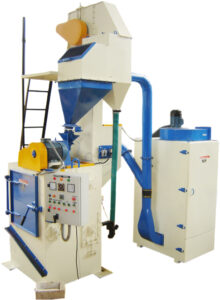
Tumblast Shot Blasting Machine
Heavy-duty Tumblast Shot Blasting Machine for efficient rust removal, descaling, cleaning and surface preparation of metal components, castings and forgings.
Table of Contents
- What is a Tumblast Shot Blasting Machine?
- What Factors Influence Tumblast Shot Blasting Machine Price?
- Key Components and Their Impact on Tumblast Machine Cost
- Typical Price Range by Tumblast Machine Type and Capacity
- Beyond the Purchase: Operational & Maintenance Costs
- Tumblast Shot Blasting Machine vs. Other Blasting Technologies
- Choosing the Right Tumblast Shot Blasting Machine Manufacturer
- Tips for Getting the Best Value for Your Investment
- Frequently Asked Questions About Tumblast Shot Blasting Machines
- Conclusion
What is a Tumblast Shot Blasting Machine?
A Tumblast Shot Blasting Machine, often simply referred to as a “Tumblast,” is a type of industrial cleaning equipment designed for surface preparation. It utilizes a rotating rubber or steel belt (tumble belt) to gently tumble workpieces while abrasive media (shot) is propelled at high velocity onto their surfaces. This process effectively removes rust, scale, burrs, old paint, and other contaminants, creating a clean, uniform, and often roughened surface ideal for subsequent coatings, painting, or further processing.
These machines are highly versatile and are commonly used for batch processing of small to medium-sized components that can withstand tumbling without damage. Their effectiveness stems from the continuous exposure of all surfaces of the parts to the abrasive stream, ensuring thorough cleaning and finishing.
What Factors Influence Tumblast Shot Blasting Machine Price?
The cost of a Tumblast Shot Blasting Machine is not a fixed figure. It’s a complex calculation based on several interdependent variables. Understanding these factors is key to predicting the overall Tumblast Shot Blasting Machine price for your specific needs.
Machine Size and Capacity
One of the most significant determinants of cost is the machine’s physical size and its capacity to process workpieces. Larger machines with higher load capacities and bigger tumble belts naturally require more materials for construction, more powerful motors, and more complex engineering, leading to a higher price tag.
- Basket/Load Capacity: Measured in kilograms (kg) or cubic feet (cu ft), this indicates how much material the machine can process in one cycle. Higher capacity machines are more expensive.
- Tumble Belt Dimensions: The width and length of the tumble belt directly correlate with the size of parts that can be processed and the overall volume per batch.
Level of Automation
The degree of automation plays a crucial role in pricing. Basic models are typically manual load/unload, while advanced systems can be fully integrated into production lines.
- Manual Machines: Generally the most affordable, requiring operators to manually load and unload parts.
- Semi-Automatic Machines: May feature automated blasting cycles but still require manual intervention for loading/unloading or specific controls.
- Fully Automatic Machines: These integrate seamlessly into production lines with automated loading, unloading, and continuous operation, drastically reducing labor costs but significantly increasing the initial investment. Features like automatic abrasive top-up systems, dust collector cleaning, and PLC controls contribute to their higher price.
Technical Specifications and Features
The specific technical features and components integrated into the machine contribute substantially to its cost.
- Number and Power of Blast Wheels: More blast wheels and higher horsepower (HP) motors for each wheel increase blasting intensity and coverage but also increase power consumption and the machine’s initial cost.
- Abrasive Media Recycling System: Efficient abrasive separation and recycling systems (magnetic separators, air-wash separators) reduce media consumption and operational costs, but add to the initial machine price.
- Dust Collector System: The type, size, and efficiency of the dust collector (e.g., cartridge filter vs. bag filter, reverse pulse jet cleaning) directly impact cost and are critical for environmental compliance and operator safety.
- Control System: Advanced PLC (Programmable Logic Controller) systems with touch screens offer greater control, diagnostics, and programmability, but come at a premium compared to basic control panels.
- Material of Construction: Machines built with heavy-duty, wear-resistant materials (e.g., manganese steel liners, chrome alloy components) for critical areas like blast wheels and chambers will have a higher price due but offer superior durability and longer lifespan.
- Specialized Options: Features like vibratory shake-out screens, automatic door mechanisms, sound insulation, special paint finishes, or custom fixturing for delicate parts will add to the overall Tumblast Shot Blasting Machine price.
Manufacturer and Brand Reputation
Just like with any industrial equipment, the reputation and brand of the Tumblast Shot Blasting Machine manufacturer significantly influence its price. Established manufacturers with a track record of quality, reliability, innovation, and excellent after-sales support often command higher prices. This premium can be justified by superior engineering, better component quality, longer warranties, and readily available spare parts.
Conversely, newer or smaller manufacturers might offer more competitive pricing to enter the market, but buyers should carefully assess their product quality, customer service, and longevity in the industry.
Customization Requirements
Standard Tumblast machines are available, but many businesses require custom modifications to suit their unique production lines or specific workpiece requirements. Any customization, whether it’s altering the chamber size, integrating special handling systems, or adapting controls, will increase the overall project cost.
After-Sales Service and Warranty
The provision of after-sales service, including installation, commissioning, training, maintenance contracts, and warranty period, is often bundled into the overall price or offered as an additional service. Comprehensive support can add to the initial investment but provides peace of mind and ensures optimal machine performance throughout its lifecycle.
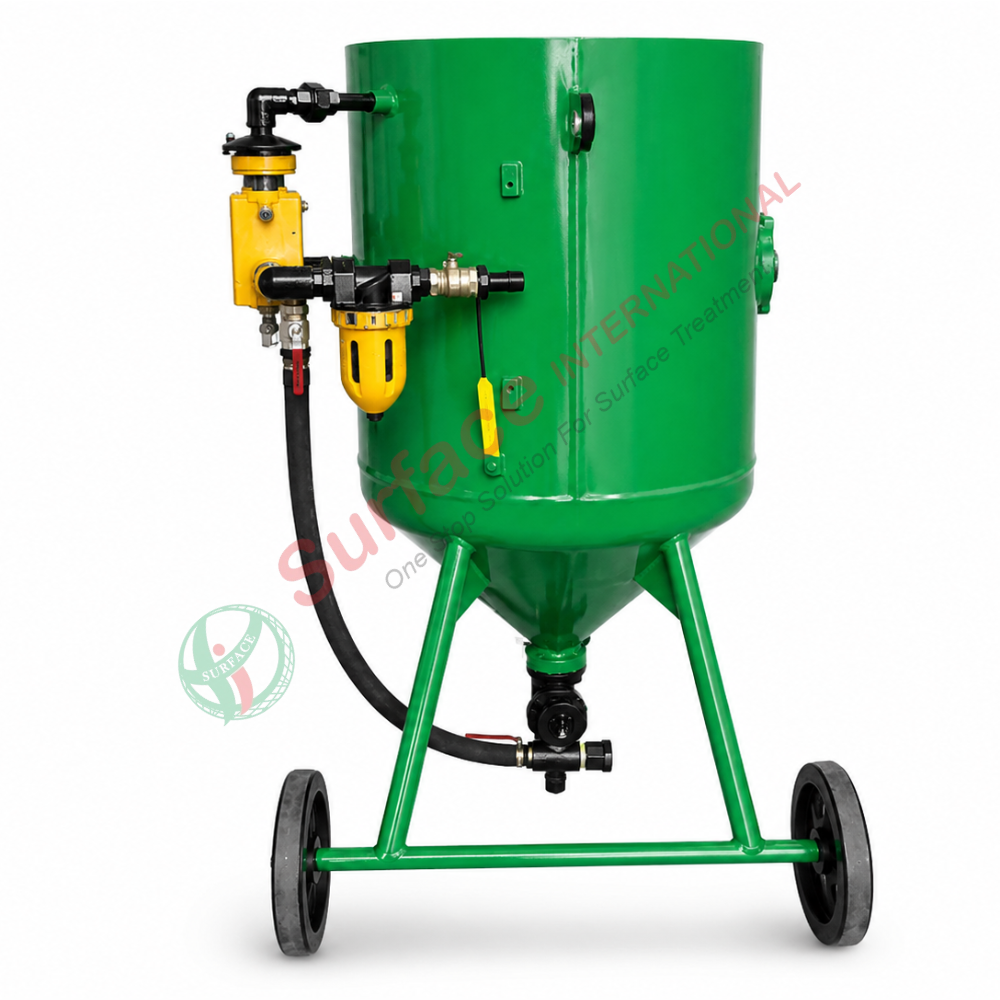
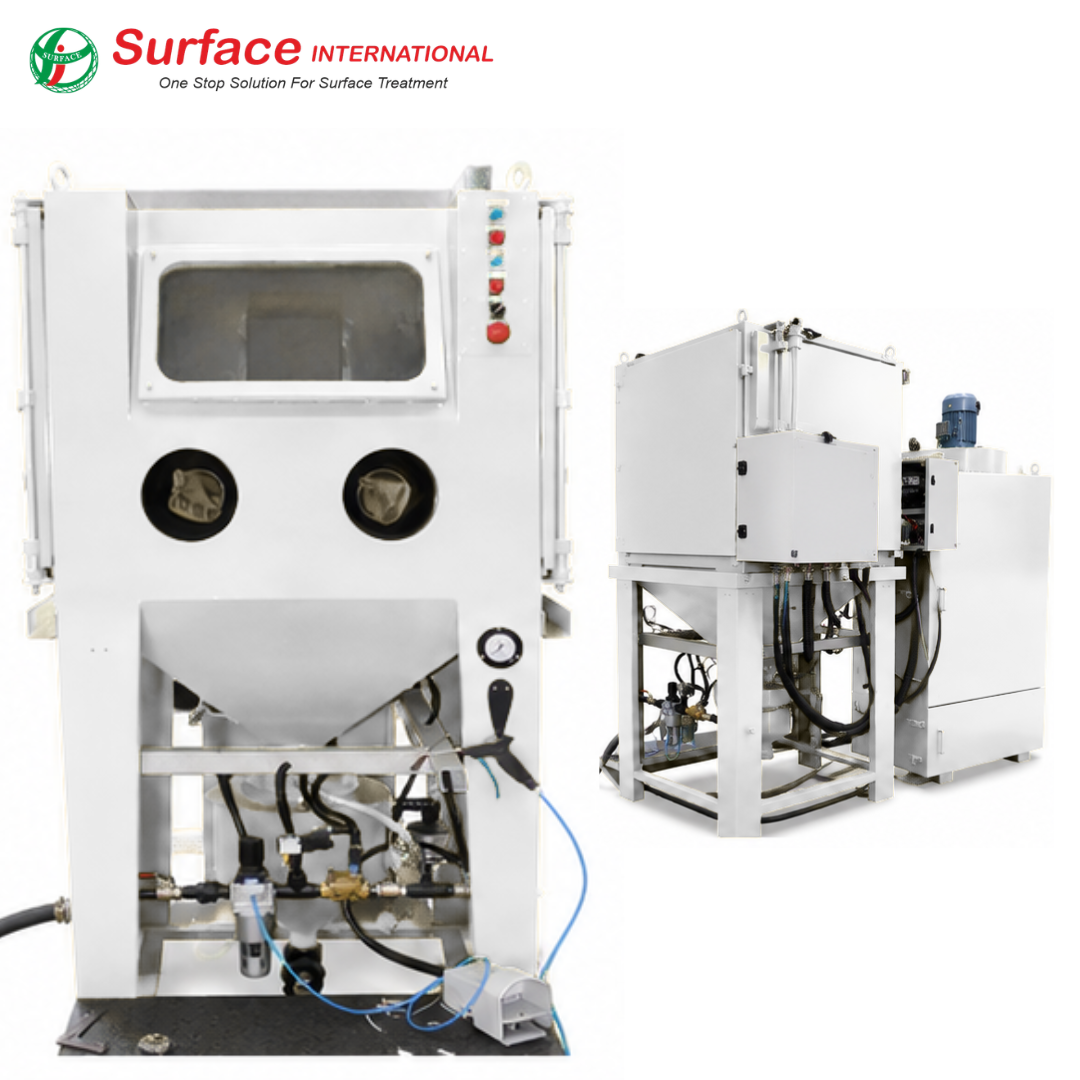
Explore Our Sand Blasting Machines
Explore our industrial blasting and surface preparation machines.
 01
 02
 03
 04
 05
 06
 07
 08
Key Components and Their Impact on Tumblast Machine Cost
To further understand the price breakdown, it’s helpful to look at the primary components and how their specifications influence the total Tumblast Shot Blasting Machine price.
- Blasting Chamber & Liner Material: The construction of the chamber itself, especially the type of wear-resistant liners (e.g., manganese steel, rubber), directly impacts durability and cost. Thicker, higher-grade liners mean higher material costs and longer lifespan.
- Blast Wheels: The heart of the machine. The number of wheels, their diameter, material composition (e.g., high-chrome alloy for blades), and motor power (kW/HP) are major cost drivers. More powerful and durable wheels mean higher cost.
- Tumble Belt: Whether it’s a durable rubber belt (more common for general applications) or a sturdy steel belt (for heavier, more aggressive applications), its material, construction, and mechanism contribute significantly to the cost.
- Abrasive Recovery & Separation System: The sophistication of this system (e.g., air-wash separator, magnetic separator for ferrous parts, elevator, screw conveyors) affects both efficiency and cost. High-efficiency systems are more expensive initially but save on abrasive media over time.
- Dust Collector: Essential for safety and environmental compliance. The size, filtration efficiency (e.g., cartridge vs. bag filters), cleaning mechanism (e.g., pulse-jet), and motor power of the dust collector system are substantial cost components.
- Control Panel & Electricals: From basic push-button controls to advanced PLC systems with HMI (Human Machine Interface) touchscreens, the complexity of the electrical system and choice of components (e.g., Siemens, Schneider, ABB) influence the price.
- Motors: All motors (for blast wheels, elevator, dust collector, tumble belt drive) contribute to the cost. Energy-efficient motors might cost more upfront but offer long-term savings.
Typical Price Range by Tumblast Machine Type and Capacity
While precise figures are difficult without specific quotations, we can outline typical price ranges for different categories of Tumblast Shot Blasting Machines in India. These are estimates and can vary based on the manufacturer, additional features, and current market conditions.
Small to Medium Capacity Tumblast Machines (50-250 kg Load Capacity)
- Typical Price Range: ₹8,00,000 to ₹12,00,000
- Characteristics: Often feature 1 or 2 blast wheels, basic control panels, suitable for smaller batches of components like fasteners, small castings, automotive parts, etc. May be semi-automatic or with manual loading/unloading.
Medium to High Capacity Tumblast Machines (250-500 kg Load Capacity)
- Typical Price Range: ₹12,00,000 to ₹18,00,000
- Characteristics: Usually equipped with 2 or more blast wheels, more robust construction, potentially advanced abrasive recycling, and improved dust collection. Often includes more automation features. Ideal for larger volume production or bigger individual components.
Large Capacity & Heavily Automated Tumblast Machines (500 kg+ Load Capacity)
- Typical Price Range: ₹18,00,000 to ₹30,00,000+
- Characteristics: Designed for high-volume industrial applications, featuring multiple powerful blast wheels, fully automatic loading/unloading systems, sophisticated PLC controls, highly efficient abrasive handling, and heavy-duty, wear-resistant components throughout. These machines are often custom-engineered.
It’s important to reiterate that these are rough estimates. A detailed quotation from a reputable Tumblast Shot Blasting Machine manufacturer is always recommended for accurate pricing.
Beyond the Purchase: Operational & Maintenance Costs
The initial Tumblast Shot Blasting Machine price is just one part of the total cost of ownership. Over the machine’s lifespan, operational and maintenance expenses can significantly impact your budget. Ignoring these can lead to unexpected financial burdens.
- Abrasive Media Consumption This is often the largest recurring operational cost. The type of abrasive (steel shot, grit, cut wire), its quality, and the efficiency of the machine’s abrasive recycling and separation system directly influence consumption. Using cheap, low-quality abrasive can lead to faster wear of machine components and higher overall media costs due to quicker breakdown.
- Power Consumption Shot blasting machines are energy-intensive, primarily due to the powerful motors driving the blast wheels, the dust collector, and the abrasive handling system. The higher the blast wheel horsepower and the larger the dust collector, the greater the electricity bill.
- Wear Parts Replacement Components exposed to the abrasive stream, such as blast wheel blades, control cages, impellers, liners, and the tumble belt itself, are subject to wear and tear. Regular replacement of these wear parts is essential to maintain machine performance and prevent costly breakdowns. The frequency of replacement depends on machine usage, abrasive type, and the quality of the wear parts.
- Labor Costs Even with automated systems, some level of operator supervision, loading/unloading (for non-automated systems), and routine checks are required. Labor efficiency improves with more automated machines, potentially offsetting their higher initial purchase price over time.
- Maintenance and Servicing Regular preventive maintenance is crucial for extending machine life and ensuring consistent performance. This includes lubrication, inspection of components, cleaning, and calibration. Neglecting maintenance can lead to unexpected failures and expensive repairs.
- Dust Collector Filter Replacement Filters in the dust collector system have a finite lifespan and need periodic replacement. The cost of these filters, especially for high-efficiency systems, can be substantial.
When evaluating the Tumblast Shot Blasting Machine price, always consider the long-term operational and maintenance costs. A cheaper machine upfront might prove more expensive in the long run if it’s inefficient or requires frequent, costly part replacements.
Tumblast Shot Blasting Machine vs. Other Blasting Technologies
While the Tumblast machine is excellent for certain applications, it’s important to understand how it compares to other surface preparation methods, particularly in terms of functionality and relative cost considerations. This comparison will help you ascertain if a Tumblast is the right fit for your specific needs, or if an alternative like a Sand Blasting Machine or another type of Airless Shot Blasting Machine would be more suitable.
1. Tumblast Shot Blasting Machine
- Mechanism: Tumbles workpieces in a rotating drum while blasting them with abrasive media (typically steel shot/grit) from centrifugal blast wheels. It’s an Airless Shot Blasting Machine, meaning it doesn’t use compressed air for propelling the media.
- Ideal for: Batch processing of small to medium-sized, robust parts that can withstand tumbling. Excellent for descaling, deburring, surface hardening (shot peening), and preparing surfaces for coating. High productivity for bulk parts.
- Advantages: High productivity, good uniformity for tumble-friendly parts, environmentally friendly (less dust than air blasting), lower operational cost per part compared to air blasting, efficient abrasive recycling.
- Limitations: Not suitable for fragile, very large, or intricately shaped parts that cannot tumble or might be damaged. Potential for part-on-part impingement damage.
- Relative Cost: Initial Tumblast Shot Blasting Machine price is moderate to high, but operational costs per part are generally lower than manual air blasting due to efficient media recycling and higher throughput.
2. Sand Blasting Machine (Air Blasting)
- Mechanism: Uses compressed air to propel abrasive media (which can include sand, but more commonly aluminum oxide, glass beads, garnet, etc.) through a nozzle onto the workpiece.
- Ideal for: Delicate parts, complex geometries, parts that cannot tumble, localized blasting, and applications requiring fine control over surface finish. Can handle very large or irregular parts in a blast room.
- Advantages: Versatile for various part sizes and shapes, fine control over blasting intensity, good for intricate areas, portable options available.
- Limitations: Lower productivity for bulk parts compared to shot blasting, higher operational costs (compressed air is expensive, abrasive media often not fully recoverable), significant dust generation requiring robust dust collection.
- Relative Cost: Initial investment for a basic Sand Blasting Machine (blast pot, compressor, nozzle) can be lower than a Tumblast. However, ongoing operational costs due to air consumption and abrasive waste are significantly higher for continuous production. For a full blast room setup, costs can be comparable or even higher than a Tumblast.
3. Other Airless Shot Blasting Machines (e.g., Hanger Type, Roller Conveyor Type)
- Mechanism: Similar to Tumblast in using centrifugal blast wheels but employs different methods for presenting parts to the blast stream. Hanger type machines suspend parts on hooks or fixtures, while roller conveyor machines pass flat or structural components through the blast zone.
- Ideal for: Parts that are too large or delicate to tumble (hanger type), or long, flat, structural components (roller conveyor type).
- Advantages: Excellent for specific large or heavy parts, high productivity for suitable geometries, maintains part orientation, uniform finish without part-on-part impingement.
- Limitations: Less versatile for a wide range of part shapes compared to Tumblast for batch operations. Hanger loading/unloading can be slower than automated tumbling.
- Relative Cost: Generally comparable to or higher than Tumblast machines, especially for highly customized or large-scale Hanger Type or Roller Conveyor Shot Blasting Machines, due to their specialized designs and larger footprints.
| Feature | Tumblast Shot Blasting Machine | Sand Blasting Machine (Air Blasting) | Other Airless Shot Blasting (e.g., Hanger Type) |
|---|---|---|---|
| Mechanism | Centrifugal wheels, parts tumble | Compressed air, abrasive nozzle | Centrifugal wheels, parts suspended/conveyed |
| Part Handling | Batch, tumbling motion | Manual, individual part focus | Batch/continuous, fixed orientation |
| Part Suitability | Robust, small to medium, non-fragile | Delicate, complex, very large, varied shapes | Large, heavy, or fragile components that can be hung |
| Productivity | High for bulk parts | Lower for bulk, good for individual | High for suitable parts |
| Abrasive Use | Efficient recycling, lower consumption | Less efficient recycling, higher consumption | Efficient recycling, lower consumption |
| Operational Cost | Moderate (power, wear parts) | Higher (air, abrasive waste) | Moderate (power, wear parts) |
| Initial Investment | Moderate to High | Lower (basic unit) to High (blast room) | High |
| Surface Control | Good for overall finish, less precise localized | Precise, localized control possible | Good for overall finish, less precise localized |
By comparing these options, you can better determine if the Tumblast Shot Blasting Machine price aligns with the value it provides for your specific surface preparation challenges, or if an alternative technology would be a more efficient and cost-effective solution.
Choosing the Right Tumblast Shot Blasting Machine Manufacturer
Selecting a reliable Tumblast Shot Blasting Machine manufacturer is as critical as evaluating the machine’s features and price. A reputable manufacturer offers not just a machine, but also expertise, support, and peace of mind. Here’s what to look for:
- Experience and Reputation Look for manufacturers with a long history in the industry and a strong reputation for quality and reliability. Check their portfolio, read customer testimonials (if available), and ask for references. A seasoned manufacturer will understand various application needs.
- Quality of Components and Construction Inquire about the materials used for critical wear parts (blast wheels, liners, belts) and the overall structural integrity of the machine. High-quality components, though potentially increasing the initial Tumblast Shot Blasting Machine price, will lead to greater durability, less downtime, and lower long-term maintenance costs.
- Technical Expertise and Customization Capabilities Does the manufacturer have a strong engineering team? Can they understand your specific application and offer tailored solutions if a standard machine doesn’t fit perfectly? Their ability to provide expert advice and customize can save you significant trouble and expense down the line.
- After-Sales Service and Support This is paramount. What kind of warranty do they offer? Do they provide installation, commissioning, and operator training? Are spare parts readily available, and what is their turnaround time for service requests? A manufacturer with robust after-sales support ensures your machine runs efficiently throughout its lifespan.
- Energy Efficiency and Environmental Compliance Ask about the machine’s power consumption and the efficiency of the dust collection system. Reputable manufacturers design machines with energy efficiency in mind and ensure they meet relevant environmental standards, which can be critical for permits and operational costs.
- Total Cost of Ownership (TCO) A good manufacturer will be transparent about not just the initial Tumblast Shot Blasting Machine price, but also the estimated operational costs (power, abrasive, wear parts) and maintenance requirements, helping you calculate the true TCO.
Tips for Getting the Best Value for Your Investment
Securing a competitive Tumblast Shot Blasting Machine price doesn’t mean compromising on quality or functionality. Here are practical tips to ensure you get the best value:
- Clearly Define Your Requirements Before approaching manufacturers, have a clear understanding of your needs:
- What are the dimensions and weight of your parts?
- What is the required throughput per hour/day?
- What level of surface finish do you need?
- What kind of contaminants need to be removed?
- What is your budget range for both purchase and operation?
- Obtain Multiple Quotes Contact several reputable Tumblast Shot Blasting Machine manufacturers to obtain comparative quotes. Don’t just compare the upfront price; scrutinize the specifications, included features, warranty terms, and after-sales support for each quote.
- Consider Long-Term Operational Costs As discussed, the initial purchase price is only one aspect. Evaluate the machine’s projected energy consumption, abrasive media usage rates, and the expected lifespan and cost of wear parts. A slightly more expensive machine upfront might be significantly cheaper to operate over 5-10 years.
- Prioritize Durability and Reliability Downtime is expensive. Investing in a machine built with quality components and robust engineering will pay off in the long run through reduced maintenance, fewer breakdowns, and consistent performance.
- Negotiate Effectively Don’t be afraid to negotiate, especially if you have multiple quotes. Discuss potential discounts, bundled services, or alternative configurations that might meet your needs at a better price point.
- Ask About Training and Installation Ensure the quotation includes professional installation, commissioning, and comprehensive operator training. Proper setup and knowledgeable operators are crucial for optimal machine performance and longevity.
- Assess Local Support and Spare Parts Availability If purchasing from an international manufacturer, inquire about their local presence or authorized service partners in your region. Easy access to spare parts and technical support can prevent long delays and keep your operations running smoothly.
Frequently Asked Questions About Tumblast Shot Blasting Machines
Q1: What are the main advantages of a Tumblast Shot Blasting Machine?
A Tumblast Shot Blasting Machine excels in high-volume batch processing of small to medium-sized, robust components. Its main advantages include high productivity, efficient abrasive recycling (leading to lower operational costs per part), consistent surface finish for parts that can tumble, and being an environmentally friendly cleaning process due to contained blasting and effective dust collection.
Q2: Can Tumblast machines be used for delicate or fragile parts?
Generally, Tumblast machines are not ideal for delicate, fragile, or very intricate parts due to the tumbling action and part-on-part impingement, which can cause damage. For such components, a hanger-type shot blasting machine or an air-blasting (sand blasting) machine offers better control and minimizes the risk of damage.
Q3: What kind of abrasive media is typically used in a Tumblast Shot Blasting Machine?
The most common abrasive media used in Tumblast Shot Blasting Machines are steel shot and steel grit. Steel shot provides a peened, smoother finish, while steel grit offers a rougher profile for better coating adhesion. Other media like cut wire shot can also be used depending on the specific application requirements.
Q4: How does automation affect the Tumblast Shot Blasting Machine price?
Automation significantly increases the Tumblast Shot Blasting Machine price. Manual machines are the least expensive, while semi-automatic machines offer some automated functions but still require manual loading/unloading. Fully automatic machines, which integrate into production lines with automated material handling and advanced controls, represent the highest initial investment but offer significant labor savings and increased throughput in the long run.
Q5: What are the essential maintenance tasks for a Tumblast machine?
Essential maintenance tasks include regular inspection and replacement of wear parts (blast wheel components, liners, tumble belt), checking abrasive levels and quality, cleaning the dust collector filters, lubricating moving parts, and performing routine safety checks. Adhering to the manufacturer’s maintenance schedule is crucial for machine longevity and performance.
Q6: Is a Tumblast machine energy efficient?
Compared to air-blasting systems, Airless Shot Blasting Machine like the Tumblast are generally more energy-efficient for surface preparation, as they do not rely on expensive compressed air to propel the abrasive. However, they still consume significant electricity for blast wheel motors and dust collection. Modern machines are designed with energy-efficient motors and optimized blast patterns to reduce power consumption.
Conclusion
Determining the precise Tumblast Shot Blasting Machine price involves more than just looking at a single figure. It requires a thorough understanding of the factors that influence cost, from machine size and automation to technical specifications and the reputation of the Tumblast Shot Blasting Machine manufacturer. While initial costs can range from ₹8,00,000 to over ₹15,00,000 in India, savvy buyers will also factor in long-term operational and maintenance expenses to arrive at a true total cost of ownership.
By carefully evaluating your specific requirements, comparing various options, and choosing a reliable partner, you can make an informed investment that enhances your production efficiency and delivers excellent return on your surface preparation needs.
If you’re considering a Tumblast Shot Blasting Machine for your industrial needs, engaging with experienced manufacturers can provide detailed quotations and tailored solutions to match your operational demands and budget. Reach out to a specialist to discuss your specific application and explore the best options available.