The automotive industry operates on precision, durability, and aesthetics. Every component, from a crankshaft to a car body panel, undergoes rigorous processing to meet these high standards. Central to this process is surface preparation, and that’s where Shot Blasting Machines For Automotive Industry play a pivotal role. These powerful industrial machines are indispensable for ensuring the quality, longevity, and performance of countless vehicle components by efficiently cleaning, strengthening, and preparing surfaces for subsequent treatments.
Selecting the best shot blasting machine involves understanding the specific needs of automotive manufacturing – whether it’s descaling forged parts, enhancing fatigue resistance through peening, or preparing surfaces for paint and coatings. This article will delve into the essential functions, types, and considerations for choosing the optimal shot blasting solutions that drive efficiency and quality in the automotive sector.
Explore Our Shot Blasting Machines for Automotive Industry
Advanced shot blasting solutions for automotive components, rust removal, surface cleaning and industrial finishing.
 01
 02
 03
 04
Key Types of Shot Blasting Machines for Automotive Applications
The diversity of automotive components, from tiny gears to large chassis frames, necessitates a range of shot blasting solutions. Understanding the different types of Shot Blasting Machines For Automotive Industry is crucial for selecting the right equipment.
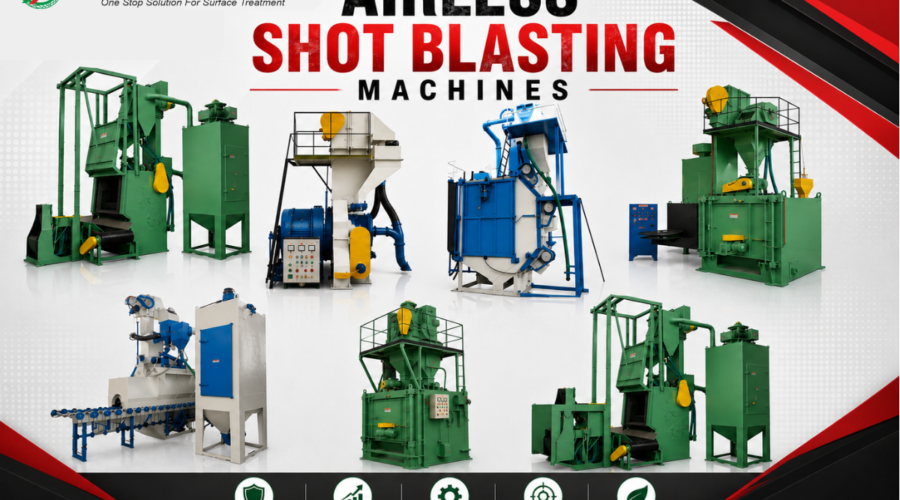
Wheel Blasters (Airless Systems)
Wheel blasters are the most common type of shot blasting machine in high-volume industrial applications, including automotive. They use a rapidly rotating turbine wheel to centrifugally propel abrasive media without compressed air. This method is highly energy-efficient and capable of processing large volumes of parts quickly.
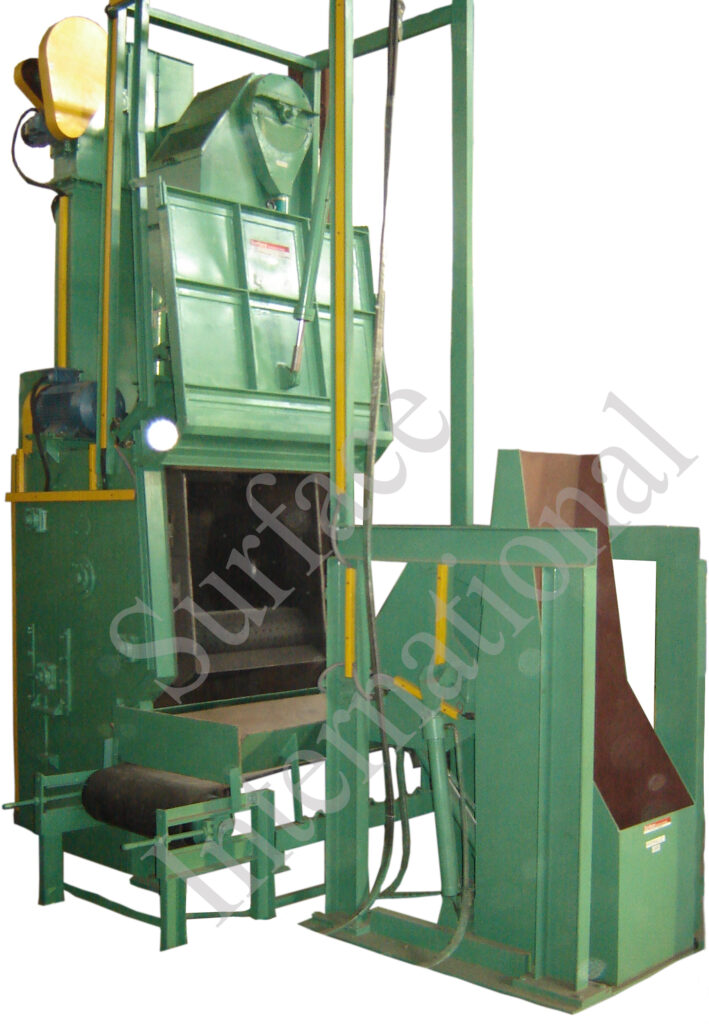
- Tumblast or Barrel Blasting Machines: Ideal for processing small to medium-sized components in bulk, such as bolts, nuts, small castings, or engine components. Parts are loaded into a tumbling rubber belt or steel apron conveyor, which continuously rotates them through the blast stream. This ensures uniform exposure to the abrasive media.
- Automotive Applications: Small forged parts, gear blanks, brake components, fasteners, small engine parts.
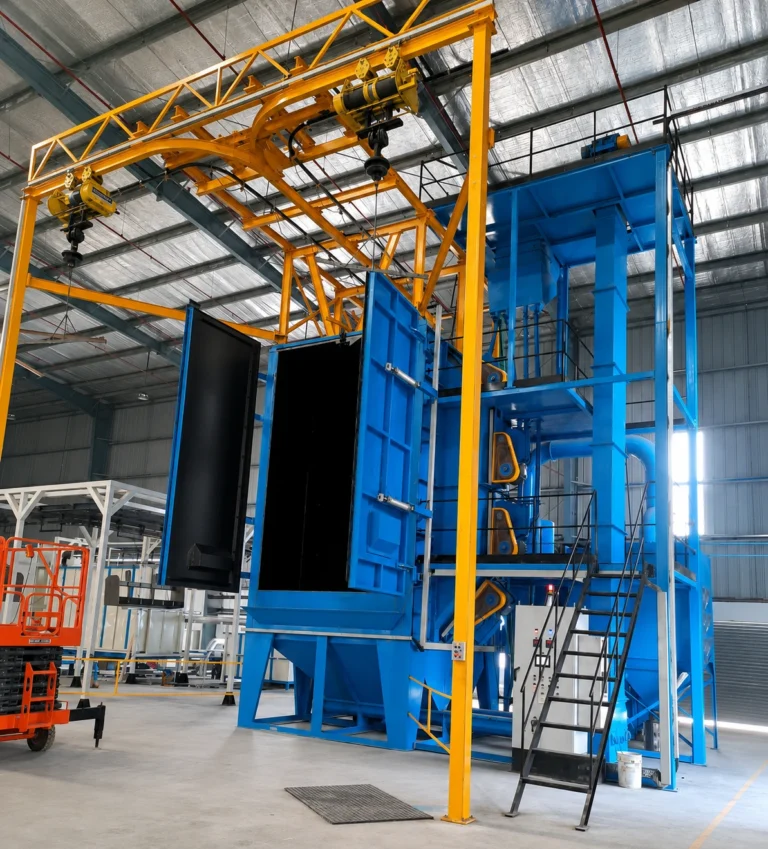
- Hanger or Hook Blasting Machines: Designed for larger, heavier, or more delicate parts that cannot be tumbled. Components are hung individually or in batches on hooks or fixtures that rotate through the blast zone. This provides excellent coverage and prevents part-on-part impingement.
- Automotive Applications: Engine blocks, cylinder heads, suspension arms, steering knuckles, alloy wheels.
- Table Blasting Machines: Feature a rotating table onto which parts are placed. The table then carries the parts into the blast chamber, exposing them to the abrasive stream. Some designs have satellite tables for continuous loading and unloading.
- Automotive Applications: Flat, heavy, or irregularly shaped castings and forgings, clutch plates, brake drums.
- Roller Conveyor Blasting Machines: Used for long, flat, or structural components. Parts are conveyed through a series of blast wheels on rollers, providing continuous processing.
- Automotive Applications: Chassis frames, structural beams, body panels, larger welded assemblies.
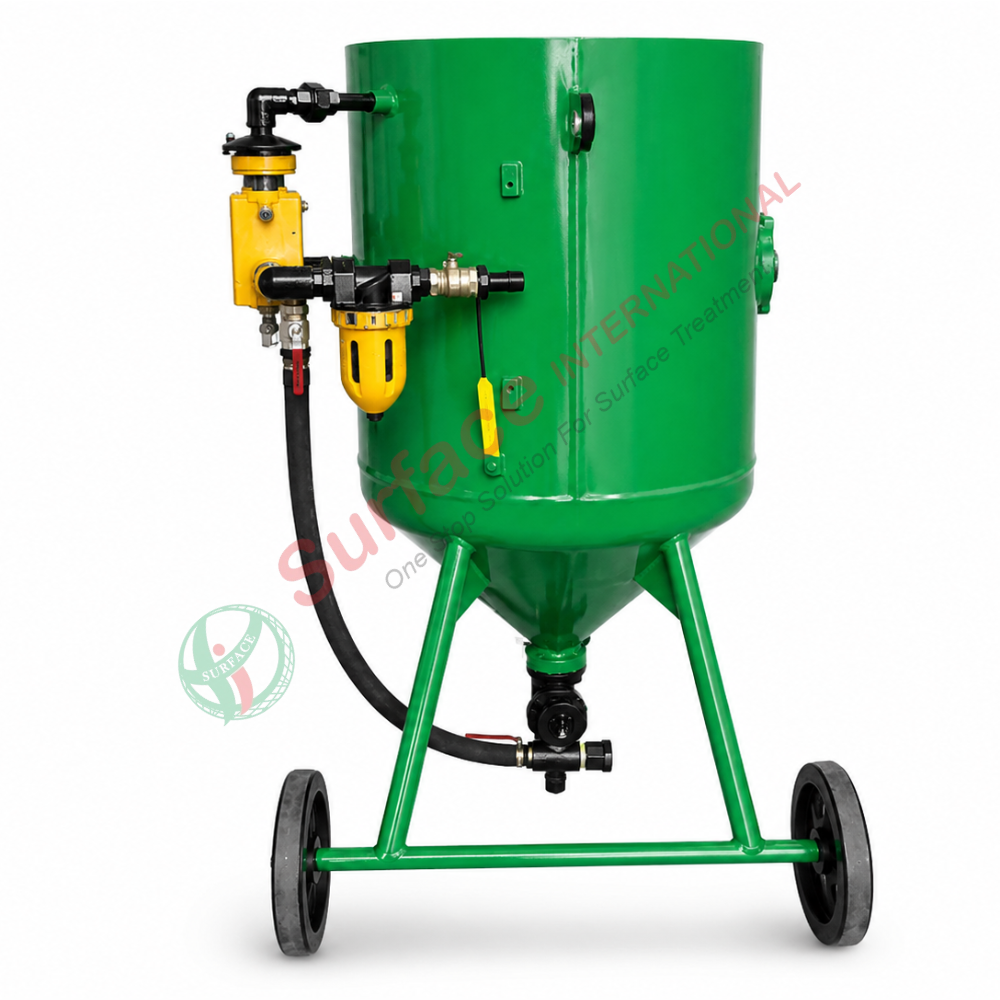
Air Blasters (Compressed Air Systems)
Air blasters utilize compressed air to propel abrasive media through a nozzle onto the workpiece. While generally less energy-efficient for high-volume processing compared to wheel blasters, they offer greater precision and control, making them suitable for specific automotive tasks.
- Blast Rooms: Large enclosed areas where operators manually blast very large or complex components. The operator wears protective gear and uses a hand-held nozzle.
- Automotive Applications: Large truck chassis, bus frames, custom vehicle parts, reconditioning of heavy-duty components.
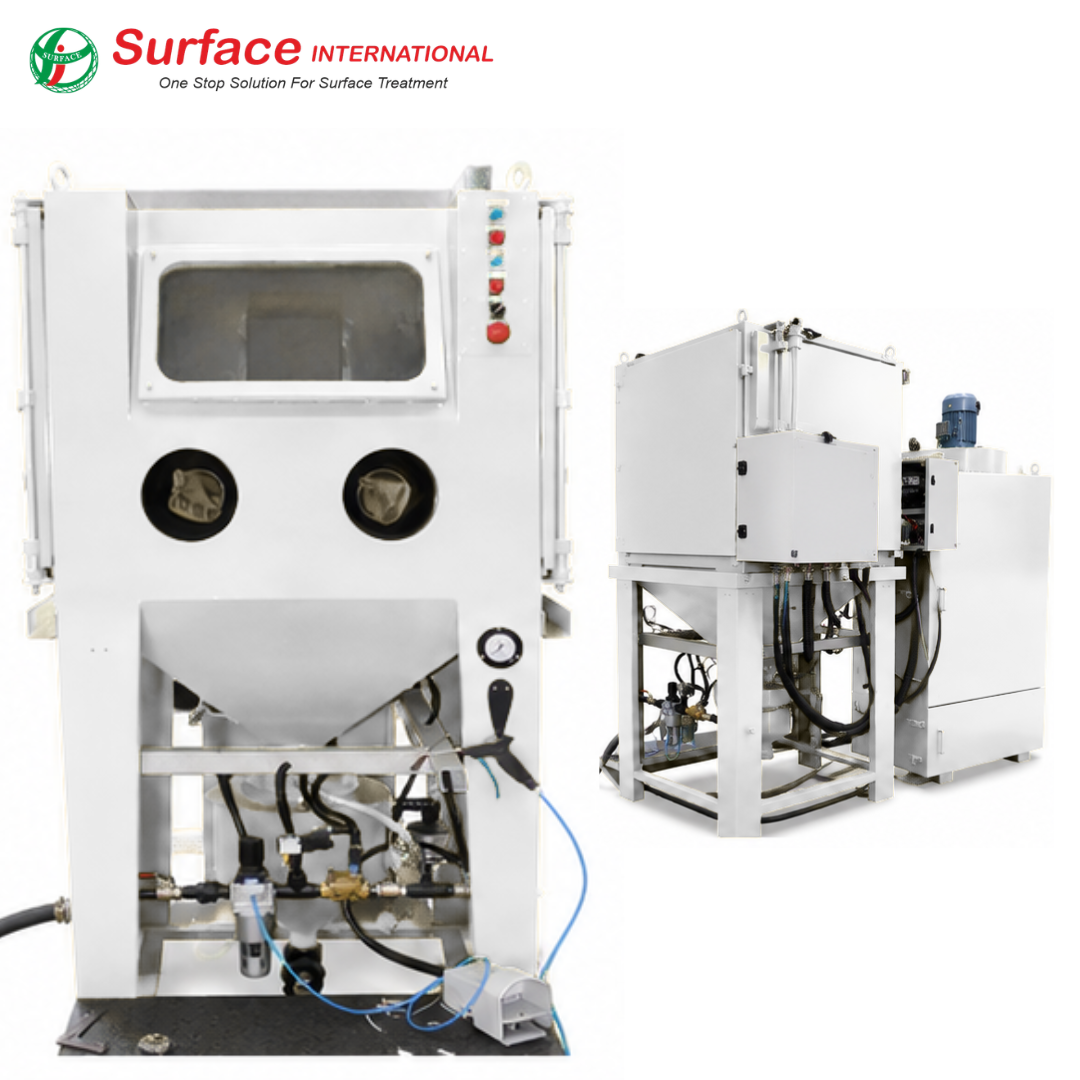
- Blast Cabinets (Manual and Automated): Enclosed cabinets for smaller parts, where an operator inserts their hands into gloves attached to the cabinet walls to manipulate parts under a nozzle. Automated versions can include turntables or fixtures for precise, repeatable blasting.
- Automotive Applications: Intricate engine components, delicate aluminum parts, turbine blades, prototype components, touch-up work.
Special Purpose Machines
The automotive industry often requires highly specialized or fully integrated blasting solutions for specific high-volume parts or complex manufacturing lines.
- Robotic Blasting Systems: Combine the precision of air blasting with the consistency and automation of robotics. A robotic arm manipulates the blasting nozzle or the workpiece, ensuring extremely accurate and repeatable surface treatment, especially for complex geometries or peening applications.
- Automotive Applications: Crankshafts, camshafts, connecting rods for precise peening; complex aluminum castings.
- Inline or Continuous Blasting Systems: Integrated directly into a production line, these machines allow for continuous flow of parts, maximizing throughput and minimizing handling. They are often custom-designed for a particular part or series of parts.
- Automotive Applications: Brake disc manufacturing lines, spring production lines, continuous treatment of forged components.
Common Automotive Applications of Shot Blasting
The versatility of shot blasting makes it applicable to a wide array of components within the automotive manufacturing process. Here are some of the most common applications:
- Engine Components:
- Crankshafts and Connecting Rods: Critical for engine performance and longevity. Shot peening significantly enhances their fatigue strength, preventing cracks and extending operational life.
- Cylinder Heads and Engine Blocks: Used for descaling, deburring, and surface preparation to ensure proper sealing and coating adhesion.
- Gears and Transmission Parts: Peening strengthens gear teeth, improving wear resistance and reducing noise. Blasting also cleans and prepares surfaces for lubrication or protective coatings.
- Valve Springs: Shot peening is vital for extending the fatigue life of valve springs, which undergo constant stress cycles.
- Brake Components:
- Brake Discs and Drums: Descaling, cleaning, and surface preparation for casting removal and improved friction surface. Shot blasting ensures optimal contact and performance.
- Brake Calipers: Cleaning and deburring cast calipers to ensure smooth operation and proper assembly.
- Chassis and Suspension Parts:
- Suspension Arms, Steering Knuckles, and Axles: Descaling, rust removal, and surface preparation for protective coatings to prevent corrosion and improve durability. Peening can also enhance fatigue resistance.
- Leaf Springs and Coil Springs: Shot peening is fundamental for increasing the fatigue strength of all types of vehicle springs, crucial for vehicle safety and ride quality.
- Chassis Frames and Crossmembers: Large roller conveyor or hanger blasting machines clean and prepare these structural components for painting or anti-corrosion treatments.
- Body-in-White and Exterior Components:
- Body Panels (Stamping Dies): While not directly blasting body panels, shot blasting is often used to clean and maintain the stamping dies themselves, ensuring the quality of the formed panels.
- Welded Assemblies: Removing weld splatter, scale, and rust from complex welded structures before painting or further processing.
- Wheel Rims (Alloy Wheels): Cleaning, descaling, and surface preparation for painting or powder coating, ensuring an even and durable finish.
- Forgings and Castings:
- General Descaling: Almost all forged and cast automotive parts undergo blasting to remove scale and sand residue, which improves machining processes and final product quality.
- Deflashing/Deburring: Removing excess material from casting and forging processes.
- Engine Overhaul and Remanufacturing:
- Cleaning Used Parts: Shot blasting is used to thoroughly clean used engine blocks, heads, and other components during the remanufacturing process, restoring them to “like-new” condition before inspection and reassembly.
This extensive list highlights why Shot Blasting Machines For Automobile Industry are not just an optional tool, but a foundational technology for ensuring the quality, safety, and longevity of vehicles.