
INDUSTRIAL SURFACE PREPARATION

Wet Blasting Machine Manufacturer in India

Precision Cleaning. Superior Surface Finish.

Surface International is a leading manufacturer of wet blasting machines designed for effective removal of oil, grease, dirt, and other contaminants from component surfaces. Our machines provide controlled cleaning and a consistent surface finish for a wide range of industrial applications.

    ✓ 20+ Years Experience
    ✓ Custom Engineered
    ✓ Industrial Grade
    ✓ Pan India Support
    2006 Established
    20+ Years Experience
    100+ Clients
    80+ Experts
    01 / 02
    Wet Blasting Machine
    01
    Wet Blasting Machine Industrial Surface Preparation Solution
    Explore Our Wet Blasting Solutions
    INDUSTRIAL SURFACE FINISHING SOLUTIONS

    Wet Blasting Machine Models & Solutions

    Discover our industrial Wet Blasting Machine range for controlled surface cleaning and finishing. Explore the machines and contact our team for specifications, pricing and application guidance.

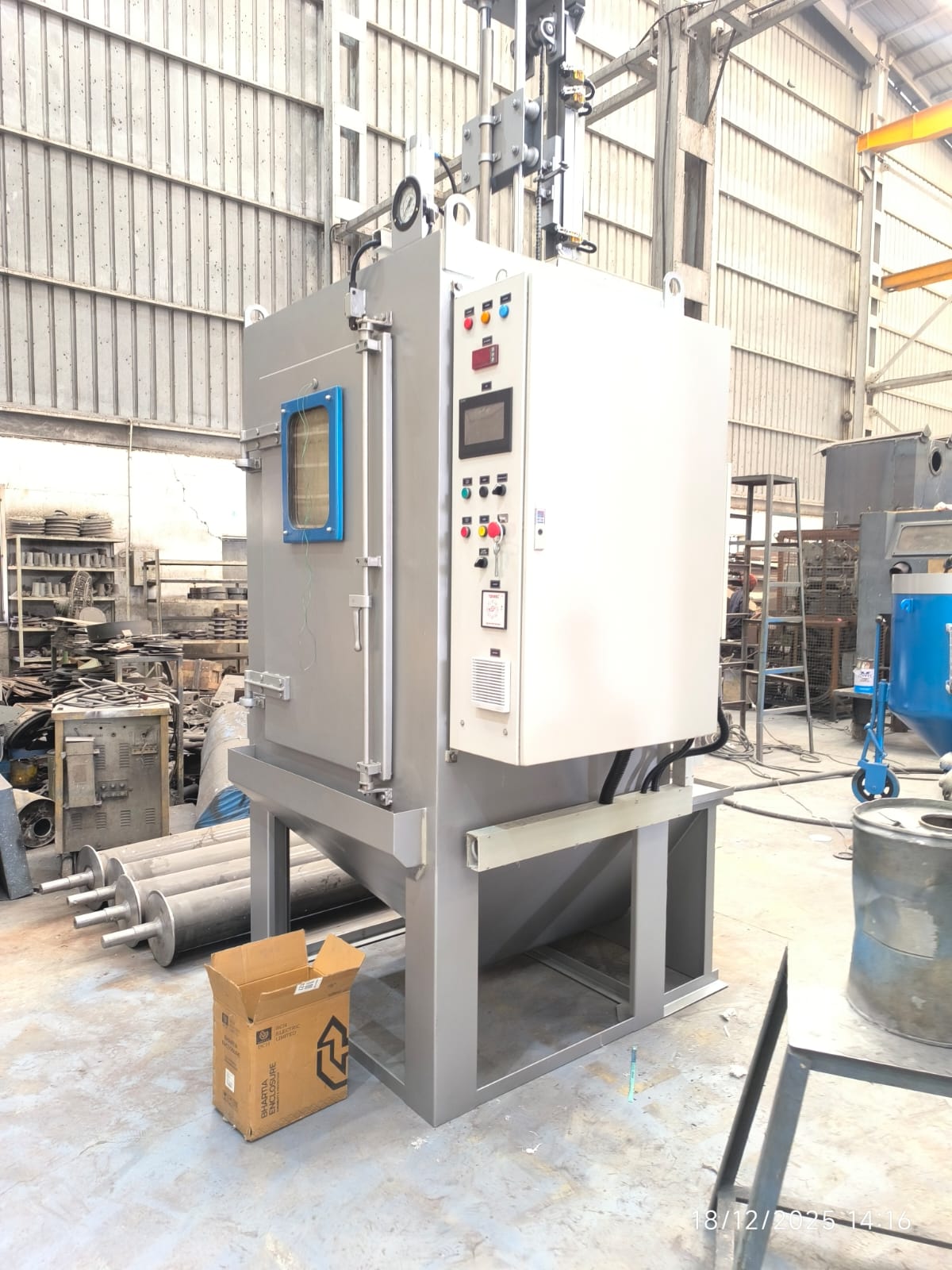
    Wet Blasting Machine Model 9182 MODEL 01 WET BLASTING
    MODEL 9182

    Wet Blasting Machine Model 9182

    An industrial wet blasting solution for surface cleaning and finishing applications. Contact our team to discuss your component requirements, machine configuration and technical specifications.

    Surface Cleaning Abrasive Finishing Industrial Applications
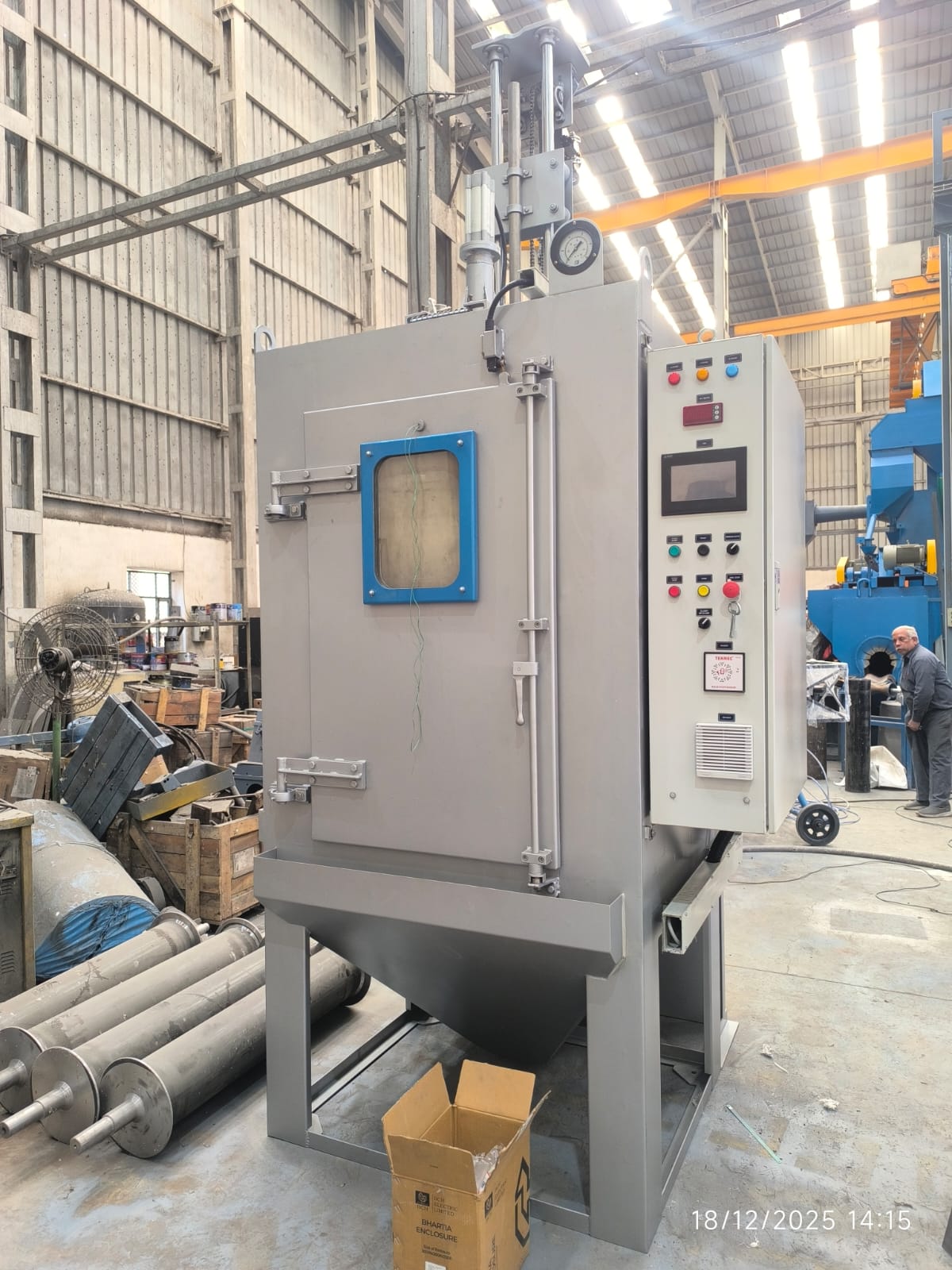
    Wet Blasting Machine Model 12090 MODEL 02 INDUSTRIAL SERIES
    MODEL 12090

    Wet Blasting Machine Model 12090

    An industrial machine option for wet abrasive surface preparation and finishing. Request model-specific information about capacity, configuration, pricing and suitability for your parts.

    Component Cleaning Surface Preparation Finishing Solutions
    Need machine pricing or technical details? Contact our team for model-specific information.

    Wet Blasting Technology

    Which Wet Blasting Machine Should You Choose?

    Choosing the right Wet Blasting Machine depends on component size, material, surface finish, production volume and cleaning requirements. Use this guide to identify the type of wet blasting setup worth evaluating for your industrial application.

    Production Requirement Machine Setup to Consider Application & Benefits
    Small components and precision parts Manual Wet Blasting Cabinet Provides operator-controlled cleaning and finishing for suitable small components and detailed surfaces.
    Repeatable batch processing Batch Wet Blasting System Suitable for processing batches of compatible components using a consistent operating procedure.
    High-volume production Automated Wet Blasting System Can reduce manual handling and support repeatable process control when appropriately configured.
    Components with complex geometry Multi-Nozzle or Robotic System Programmable or multi-nozzle arrangements can help reach complex surfaces, depending on part geometry.
    Continuous production lines Conveyor-Integrated System Can integrate wet blasting into a production line where component handling and process requirements allow.
    Fine surface finishing Controlled Wet Blasting Setup Media selection and process parameters can be adjusted to achieve the required surface appearance and finish.
    Delicate or sensitive components Application-Specific System Requires careful selection of media, pressure, nozzle distance and exposure time to protect the part.
    Parts requiring repeated cleaning cycles Wet Blasting with Media Management Appropriate slurry management, filtration and maintenance help maintain consistent process conditions.

    Need Help Selecting the Right Wet Blasting Machine?

    For an accurate recommendation, consider component dimensions, material, surface condition, required finish, production quantity, abrasive media, water and slurry management, and available floor space. The final configuration should be confirmed with the machine manufacturer.

    Find the right Wet Blasting Machine for your component cleaning and surface finishing needs.

    Get Expert Advice →

    Wet Blasting Technology

    Working Process of Wet Blasting Machine

    Wet Blasting Machines combine water and suitable abrasive media to clean and prepare component surfaces. The wet blasting process helps reduce airborne dust while providing controlled surface treatment for a wide range of industrial applications.

    How Does a Wet Blasting Machine Work?

    A Wet Blasting Machine uses a mixture of water and suitable abrasive media to treat a component's surface. Depending on the machine design, the mixture is delivered to the blasting nozzle using a pump or a compressed-air-assisted system.

    The abrasive and water mixture is directed onto the component to remove surface contaminants, light rust, deposits or unwanted coatings, depending on the selected abrasive, operating settings and material being processed.

    Water helps control dust during blasting and can provide a smoother, more controlled finish for suitable applications. After treatment, the component may be rinsed, inspected and dried according to the required finish and production process.

    Water & Abrasive A controlled mixture selected for the application.
    Blasting Nozzle Directs the wet abrasive mixture onto the surface.
    Dust Reduction Water helps suppress airborne dust during blasting.
    Rinsing & Finish Components can be rinsed, inspected and dried as required.

    Wet Blasting Process

    01

    Component Loading

    The component is placed inside the wet blasting cabinet or designated work area, following the machine's operating and safety instructions.

    02

    Water & Abrasive Preparation

    Water and the selected abrasive media are prepared in the required proportion according to the application and machine configuration.

    03

    Wet Slurry Delivery

    The water-abrasive mixture is delivered to the blasting nozzle through the machine's configured pumping or air-assisted delivery system.

    04

    Surface Cleaning & Treatment

    The wet abrasive stream is directed onto the component surface to remove suitable contaminants and achieve the required surface finish.

    05

    Slurry Collection & Management

    Used water and abrasive are collected or managed according to the machine design. Systems with suitable recovery equipment may separate reusable media from residues.

    06

    Rinsing & Inspection

    Where required, the treated component is rinsed to remove remaining slurry or residues, then checked against the required cleaning and finish standards.

    07

    Drying & Unloading

    The component is dried using a suitable method when needed, then unloaded for the next manufacturing, finishing or inspection stage.

    Simple Working Flow

    Component Loading  →  Water + Abrasive Mixing  →  Wet Slurry Delivery  →  Surface Treatment  →  Slurry Management  →  Rinsing & Inspection  →  Drying & Unloading

    In the demanding world of industrial surface preparation, the need for superior finish, efficiency, and environmental responsibility is paramount. A Wet Blasting Machine Manufacturer in India helps industries achieve effective cleaning, deburring, descaling and surface finishing. Surface International offers Wet Blasting Machine 9182 and 12090 solutions for different operational needs.

    Wet Blasting Machine Manufacturer in India

    In the demanding world of industrial surface preparation, the need for superior finish, efficiency, and environmental responsibility is paramount. For businesses across various sectors, wet blasting technology stands out as an innovative solution for cleaning, deburring, descaling, and surface finishing.

    When seeking a reliable partner for this technology, the expertise of a dedicated Wet Blasting Machine Manufacturer in India becomes indispensable. Surface International provides wet blasting machine solutions designed for different industrial requirements, with a focus on quality, durability and performance.

    Understanding Wet Blasting Technology

    Wet blasting, also known as vapor blasting or slurry blasting, is a surface preparation technique that combines fine abrasive media with water to create a slurry. This slurry is propelled onto the target surface, delivering a controlled finish compared with traditional dry blasting methods.

    Water acts as a lubricant, cushioning the impact of abrasive particles. This helps achieve a smoother, more even finish with less media impregnation and reduces static electricity and excessive heat generation.

    Unlike dry blasting, which can create significant dust, wet blasting significantly reduces airborne dust particles. Water also helps rinse away contaminants, leaving the surface ready for the next suitable processing stage.

    The process takes place inside a specially designed wet blasting cabinet or chamber, where the abrasive slurry is prepared. A pump delivers the slurry to a blast gun, which directs it towards the workpiece. The choice of abrasive, pressure and blasting duration determines the final surface finish.

    Why Choose a Wet Blasting Machine Manufacturer in India?

    Choosing a Wet Blasting Machine Manufacturer in India offers advantages for businesses seeking industrial surface preparation equipment. Local manufacturers understand the market demands, regulatory frameworks and operational challenges faced by Indian industries.

    Procuring equipment from an Indian manufacturer can offer cost-effectiveness through reduced shipping costs, import duties and simpler logistics. Local sourcing may also make spare parts and after-sales service more accessible, helping reduce downtime and support machine maintenance.

    Indian manufacturers can also offer customized solutions according to component dimensions, required functions and production volumes. A customized machine can be designed to integrate with existing workflows and address specific surface preparation requirements. Supporting local industry also contributes to the Indian manufacturing ecosystem.

    Key Features of a High-Quality Wet Blasting Machine

    A suitable wet blasting machine should be designed around durability, efficiency, maintenance and operator safety. Consider the following features when evaluating equipment.

    • Robust Construction: Appropriate corrosion-resistant materials, including stainless steel where required, help withstand a wet and abrasive operating environment.
    • Efficient Slurry Pump: A suitable pump supports consistent abrasive slurry delivery, which is important for uniform surface treatment.
    • Advanced Filtration System: Filtration and settlement arrangements help maintain slurry cleanliness and support media life.
    • Ergonomic Design: Comfortable armholes, clear viewing windows and accessible controls can improve operator comfort.
    • Safety Features: Appropriate door interlocks, emergency stops and other protective arrangements help support safe operation.
    • Customization Options: Nozzle types, operating settings and compatible abrasive media should suit the intended application.
    • Maintenance Accessibility: Easy access to internal components simplifies inspection, cleaning and servicing.

    A reputable wet blasting machine manufacturer should consider these features to deliver reliable equipment and consistent surface treatment results.

    Diverse Applications of Wet Blasting Machines

    Wet blasting is used across a wide range of industries where controlled cleaning, deburring and finishing are required. Its reduced airborne dust and controlled surface treatment make it useful for many precision applications.

    • Automotive Industry: Cleaning engine components, restoring automotive parts, deburring machined components and preparing surfaces for painting or coating.
    • Aerospace and Aviation: Cleaning selected turbine blades, landing gear components and other parts for inspection or overhaul.
    • Medical Devices: Finishing suitable surgical instruments, implants and precision medical components.
    • Tooling and Mould Making: Cleaning moulds, deburring cutting tools and removing suitable heat-treatment scale.
    • Restoration and Refurbishment: Cleaning selected classic car parts, antique items and other components while controlling surface impact.
    • General Manufacturing: Deburring, descaling, cleaning welds and preparing components for further processing.
    • Additive Manufacturing: Finishing suitable 3D-printed metal and plastic components, including selected surface smoothing applications.

    Abrasive media, pressure and process settings should be selected according to the workpiece material and required finish.

    Factors Influencing Wet Blasting Machine Price

    The Wet Blasting Machine Price can vary according to machine specifications, production capacity and customization. Understanding the main cost factors helps businesses evaluate equipment according to their operational requirements.

    • Size and Capacity: Larger cabinets and higher-capacity systems generally cost more than compact manual machines. Workpiece dimensions and the number of parts processed are important considerations.
    • Level of Automation: Automated systems with robotic arms, conveyors and programmable controls generally require a larger initial investment than manual or semi-automatic machines.
    • Features and Specifications: Multiple blast guns, specialized nozzles, advanced filtration, pressure controls and integrated drying systems can affect the final cost.
    • Material of Construction: Construction materials and corrosion-resistance requirements influence the machine price.
    • Brand and Technology: Manufacturing quality, technical capabilities and after-sales support should be considered when comparing suppliers.
    • Customization: Special fixtures, access arrangements and production-line integration can affect the final quotation.
    • After-Sales Service and Warranty: Warranty coverage, spare parts availability and technical assistance influence the overall value of the investment.

    Consider long-term ownership costs rather than only the initial purchase price. Machine reliability, maintenance, media consumption and production efficiency can all affect operating costs.

    Choosing the Right Wet Blasting Cabinet for Your Needs

    Selecting the appropriate Wet Blasting Cabinet directly affects operational efficiency and surface finish quality. The cabinet should match the workpiece, production volume and intended application.

    • Size of Workpieces: Check maximum component dimensions and allow enough room to position and handle each part.
    • Production Volume: A manual cabinet may suit low-volume work, while semi-automatic or automated arrangements may be appropriate for higher output.
    • Material Handling: Consider loading doors, side access, carts or suitable handling arrangements according to component size and weight.
    • Operator Interface: Evaluate armhole positioning, viewing-window visibility, lighting, controls and working comfort.
    • Type of Finish Required: Check compatibility with the abrasive media, pressure settings and nozzle arrangements required for the desired finish.
    • Budget: Balance the initial investment with required features, production needs and long-term maintenance.
    • Environmental and Safety Considerations: Review lighting, safety interlocks and water or slurry management requirements.

    Consulting an experienced wet blasting machine manufacturer can help identify a configuration that matches your operational and production requirements.

    The Surface International Advantage

    Surface International focuses on industrial surface preparation solutions with an emphasis on engineering, product quality and customer requirements. The company offers Wet Blasting Machine models 9182 and 12090 for different component sizes and operational needs.

    The Wet Blasting Machine 9182 is presented as an option for a range of medium-sized components, while the Wet Blasting Machine 12090 is intended for bigger workpieces and higher production requirements, subject to the final machine configuration and specifications.

    Surface International can work with customers to understand their applications and discuss suitable machine selection and customization options. Installation, training, maintenance and spare-parts support can be discussed according to the agreed supply and service arrangement.

    Selecting equipment involves considering workpiece dimensions, material, desired surface finish, production output and the available working environment.

    Benefits of Integrating Wet Blasting into Your Operations

    Integrating wet blasting into manufacturing or maintenance operations can improve surface finish quality, process control and the working environment.

    • Superior Surface Finish: Water cushions abrasive impact and can help produce a smoother, more consistent finish for suitable applications.
    • Reduced Dust Emissions: Water suppresses much of the airborne dust generated during blasting, supporting a cleaner working environment.
    • Reduced Media Impregnation: The water barrier can reduce the risk of abrasive media becoming embedded in softer substrates.
    • Effective Cleaning: Water and abrasive action help remove suitable contaminants and prepare surfaces for subsequent processes.
    • Reduced Static Electricity: The wet process reduces static buildup associated with dry abrasive blasting.
    • Suitable for Delicate Parts: With appropriate media and settings, wet blasting can treat many precision-machined and thin-walled components.
    • Versatility: Different compatible abrasive media can support cleaning, deburring and finishing requirements.

    Proper rinsing, drying and water management remain important, particularly when residual moisture could cause corrosion or affect subsequent coating operations.

    Common Mistakes to Avoid When Purchasing a Wet Blasting Machine

    Purchasing a wet blasting machine is an important investment. Evaluating the application and machine configuration before purchase helps avoid unsuitable equipment and unnecessary operating costs.

    • Focusing Only on Price: Choosing only the lowest-priced machine can overlook durability, required features, maintenance and after-sales support.
    • Underestimating Size Requirements: A cabinet that is too small can limit the components you can process. Check the largest workpiece and handling space needed.
    • Ignoring After-Sales Support: Consider warranty terms, spare parts availability and technical assistance before selecting a supplier.
    • Overlooking Abrasive Compatibility: Confirm that the machine is suitable for the abrasive media required for your application.
    • Neglecting Filtration and Water Management: Inadequate slurry management can affect blasting efficiency and workpiece cleanliness. Consider filtration, rinsing and appropriate wastewater handling.
    • Not Considering Automation Needs: A manual machine may become a production bottleneck as volumes increase. Assess handling and automation requirements.
    • Ignoring Safety Features: Check suitable interlocks, emergency stops and other protective arrangements for safe operation.
    • Skipping Demonstration or Consultation: When possible, request a demonstration or discuss actual components and finishing requirements with the manufacturer.

    Practical Tips for Maximizing Your Wet Blasting Machine's Performance

    Following suitable operating and maintenance practices can help maintain consistent results, manage abrasive consumption and extend machine service life.

    • Regular Maintenance Schedule: Follow the manufacturer's recommendations. Inspect nozzles, pumps and seals, and clean the slurry tank and filtration system as required.
    • Proper Abrasive Selection: Choose compatible media such as glass beads, ceramic beads or aluminium oxide according to the component and required finish.
    • Maintain Slurry Consistency: Check the water-to-abrasive ratio according to machine instructions. An unsuitable mixture can cause inconsistent blasting or reduced efficiency.
    • Operator Training: Ensure operators understand machine controls, operating procedures, safety precautions and maintenance requirements.
    • Optimize Pressure and Distance: Select suitable operating pressure and gun-to-workpiece distance. Excessive intensity can damage delicate parts, while insufficient intensity can increase processing time.
    • Inspect Workpieces Before Blasting: Check for heavy grease, loose debris and contamination. Pre-cleaning may be necessary for heavily contaminated parts.
    • Effective Rinsing and Drying: Rinse treated components where required and use a suitable drying method to help prevent water spots or corrosion.
    • Monitor Wear Parts: Inspect nozzles, pumps and hoses for wear. Replace components when required to maintain consistent performance.

    Frequently Asked Questions About Wet Blasting Machines

    What is the primary difference between wet blasting and dry blasting?

    Dry blasting uses dry abrasive media propelled through a blasting system, while wet blasting combines abrasive media with water to form a slurry. Water helps reduce airborne dust, friction and heat and can produce a smoother finish for suitable applications.

    What kind of abrasive media can be used in a wet blasting machine?

    Depending on machine compatibility and the application, options may include glass beads, ceramic beads, aluminium oxide and suitable plastic media. The correct choice depends on the workpiece and required finish.

    Is a wet blasting machine suitable for delicate components?

    Wet blasting can suit many delicate components because water cushions abrasive impact and helps control heat. The abrasive type, operating pressure and treatment duration must be selected to suit the material and component geometry.

    How do I maintain my wet blasting machine?

    Maintenance includes checking slurry consistency and levels, cleaning the viewing window and cabinet, inspecting nozzles, hoses and pump components, and servicing the filtration system. Follow the maintenance schedule supplied for your machine.

    What factors affect Wet Blasting Machine Price?

    Price depends on machine size, capacity, automation, construction materials, pump and nozzle specifications, filtration and drying arrangements, and customization requirements.

    What are the environmental benefits of wet blasting?

    Wet blasting significantly reduces airborne dust compared with many dry blasting operations. Water and slurry still require appropriate management, filtration and disposal or treatment according to the process and applicable requirements.

    Conclusion

    A reliable Wet Blasting Machine Manufacturer in India is an important partner for industries seeking to improve surface preparation. Wet blasting technology combines controlled abrasive treatment with water to support cleaning, deburring, descaling and surface finishing across suitable applications.

    Surface International offers Wet Blasting Machine 9182 and 12090 options for different component sizes and production requirements. The right machine should be selected according to workpiece dimensions, material, required surface finish and production output.

    By selecting equipment that matches your application and following suitable operating and maintenance practices, you can improve process consistency and support your surface finishing goals. Contact Surface International to discuss your wet blasting requirements and obtain a suitable machine recommendation.

    Looking for a Wet Blasting Machine?

    Discuss your component, surface finish and production requirements with Surface International.

    Get Wet Blasting Machine Quotation